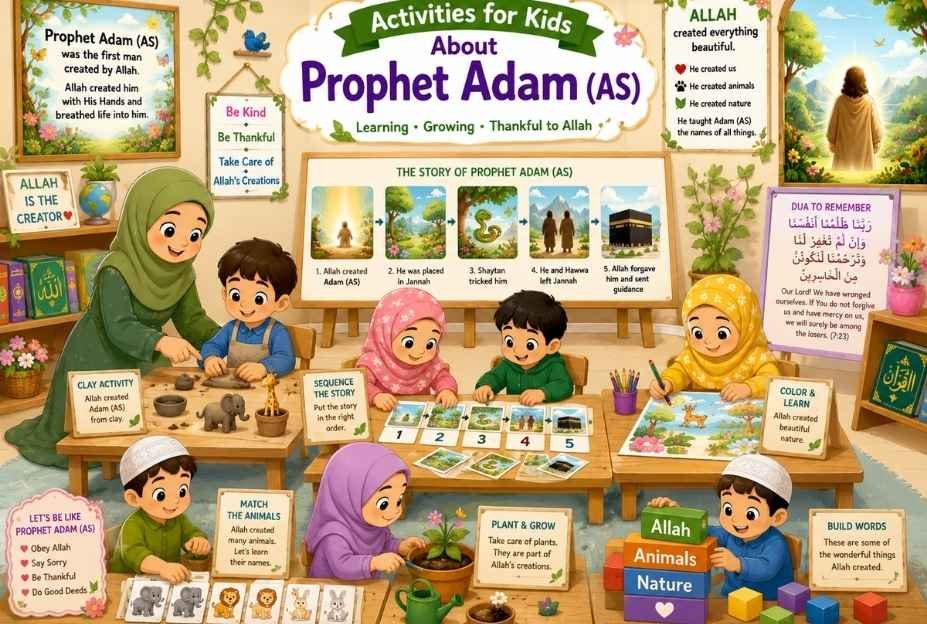
Activities for Kids About Prophet Adam
Introduction Teaching children about the prophets of Islam is one of the most rewarding things a parent or educator can do — but it can also feel overwhelming. Where do you start? How do you keep young minds engaged? And how do you make a story from the Quran feel real and relevant to a seven-year-old? Activities for kids about Prophet Adam (AS) offer the perfect entry point. As the first prophet and the first human being created by Allah, Prophet Adam’s story covers themes every child can relate to: obedience, making mistakes, feeling sorry, and being forgiven. It’s a story of creation, choice, and the mercy of Allah — and it’s one of the most detailed narratives in the Quran. Whether you’re a homeschooling parent, a Sunday school teacher, or simply a Muslim family looking to bring Islamic education to life at home, this guide gives you everything you need. From hands-on crafts to discussion guides, worksheets, storytelling tips, and age-appropriate games, you’ll find practical, engaging activities that make learning about Prophet Adam (AS) genuinely exciting for children aged 3–12. Who Is Prophet Adam (AS)? A Child-Friendly Overview Before diving into activities, it helps to have a clear, age-appropriate summary of the story to work from. Prophet Adam (AS) holds a unique place in Islamic faith as the first man and the first prophet sent by Allah. According to the Quran, Allah created Adam (AS) from clay and breathed His spirit into him. All the angels were commanded to prostrate to Adam as a sign of honor — and all obeyed, except Iblis (Shaytan), who refused out of arrogance and was expelled from Allah’s mercy. Adam (AS) lived in Jannah (Paradise) with his wife Hawwa (Eve), where they enjoyed every blessing freely. Allah gave them one instruction: do not eat from a specific tree. Shaytan tempted them, they made the mistake, and they were sent to live on Earth — but crucially, they turned back to Allah in tawbah (sincere repentance), and Allah forgave them. This act of tawbah is one of the most powerful lessons in the entire story. For children, this story teaches: This narrative foundation, drawn from authentic sources including Ibn Kathir’s Stories of the Prophets, makes Prophet Adam’s story uniquely rich for educational activities across multiple learning styles. Benefits of Using Activities to Teach Kids About Prophet Adam Research consistently shows that children retain information far better when it’s delivered through multiple modes — storytelling, movement, art, and discussion. Islamic education is no different. Here’s why activity-based learning works especially well for the story of Prophet Adam (AS): ✅ Expert Tip: According to UNICEF’s early childhood development research, children learn most effectively through play-based, hands-on experiences — making craft and game-based Islamic education not just fun, but developmentally optimal. Top Activities for Kids About Prophet Adam (By Age Group) Ages 3–5: Sensory and Visual Activities 1. Clay Creation ActivityConnect directly to the Quranic narrative: Allah created Adam (AS) from clay. Give toddlers non-toxic modeling clay and ask them to shape a human figure. While they work, narrate the creation story simply: “Allah made the first man from clay, and then He breathed life into him.” This tactile activity makes abstract concepts tangible and is deeply memorable for young children. 2. Jannah CollageAsk children to imagine Jannah (Paradise) and create a collage using cut-out flowers, trees, fruits, and glittery stars. Discuss: “What do you think Jannah looks like? What would you want there?” This nurtures a love of Jannah and connects the child emotionally to the story’s setting. 3. Coloring PagesPrint or draw simple scenes from the story: Adam (AS) in Jannah, the angels prostrating, a tree (representing the forbidden one), and the Earth. Many free Prophet Adam coloring pages are available through Islamic education platforms. These work perfectly for nursery and Reception-age children. Activities for Kids About Prophet Adam Ages 6–9: Creative and Interactive Activities 4. Story Sequencing CardsWrite or print 6–8 key events from Prophet Adam’s story on separate cards. Shuffle them and ask children to arrange them in the correct order. Events might include: This activity builds comprehension, sequencing skills, and story retention simultaneously. 5. The Tawbah Discussion CircleGather children and ask open questions: This last question is particularly powerful — Adam repented; Iblis became arrogant. It draws out a nuanced moral lesson children will remember. 6. Prophet Adam Worksheet PackWorksheets are an excellent structured activity for home or classroom use. A well-designed Prophet Adam worksheet pack might include: ✅ Tip for Educators: Platforms like TeachersPayTeachers and Islamic education sites such as Teach Me Islam and Primary Ilm offer free and affordable Prophet Adam worksheet bundles. Always verify content against authentic Quranic sources. 7. “What Would You Do?” Scenario GamePresent children with simple moral dilemmas inspired by the story: This encourages practical application of tawbah and obedience — translating Quranic lessons into real-life behavior. Ages 10–12: Reflective and Research-Based Activities 8. Prophet Adam (AS) Mini Research ProjectAssign older children a structured research project: Encourage use of Islamic reference books and age-appropriate Quran translations. This builds research skills alongside Islamic knowledge. You Also like 9. Angels vs. Iblis Debate ActivitySplit the class or siblings into two groups. One group argues from the perspective of the angels who obeyed; the other explores why Iblis thought he was right (without endorsing it) — and then the group discusses what went wrong in Iblis’s reasoning (arrogance, comparison, disobedience). This higher-order thinking activity is excellent for Sunday school classes and Islamic homeschool groups. 10. Creative Writing: A Letter from Adam (AS)Ask children to write a short letter in the voice of Prophet Adam (AS), reflecting on his experience: This creative writing task builds empathy, comprehension, and genuine connection to the prophetic narrative. Structuring a Full Lesson Plan Around Prophet Adam (AS) Here’s a simple 60-minute session structure that works for homeschool parents, weekend Islamic school teachers, and community educators: Time Activity Age Adaptation 0–10 min Read-aloud or video: Story of Prophet Adam Simplify for ages 3–6 10–20
Activities for Kids About Prophet Adam Read More »


